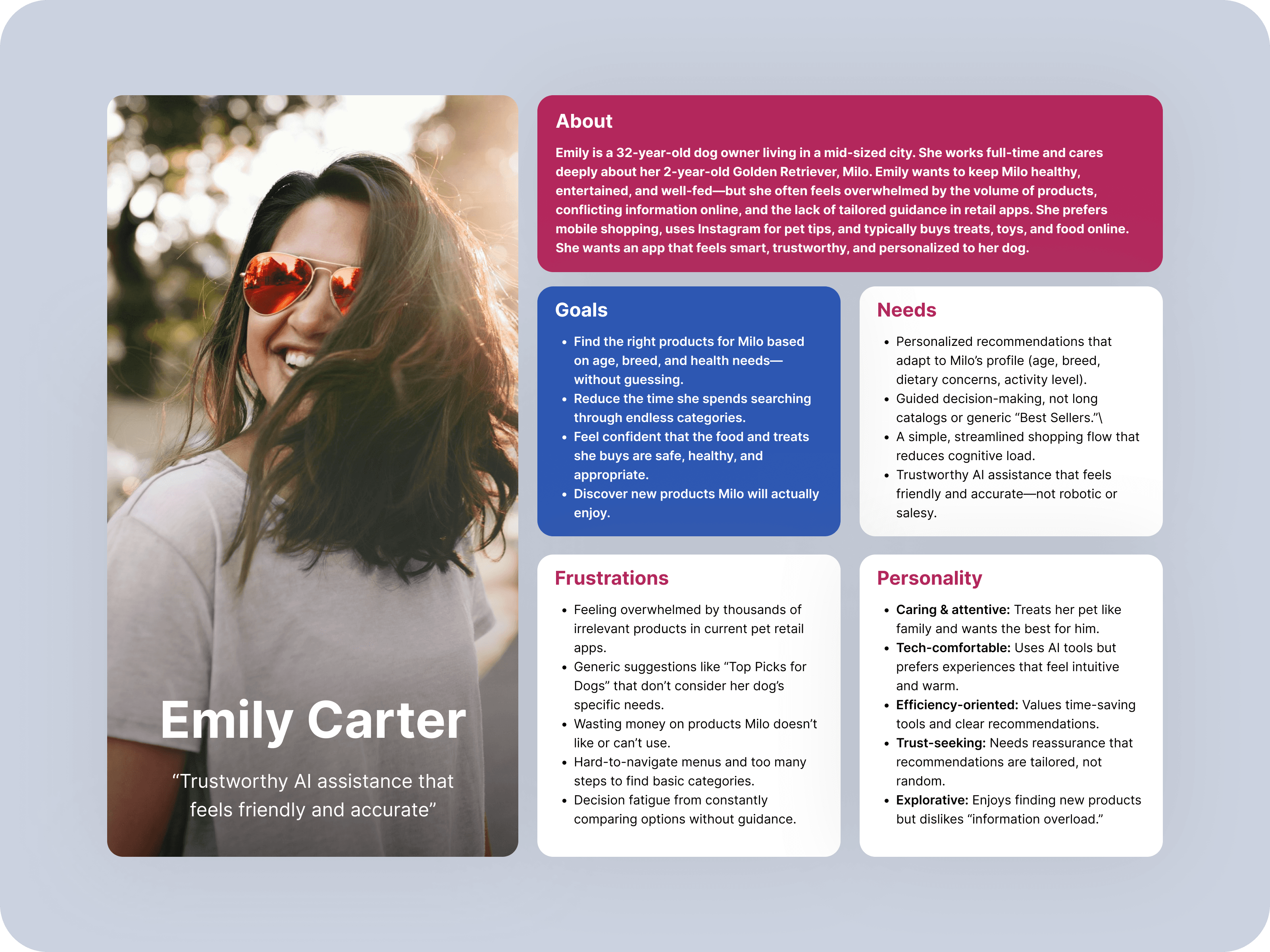
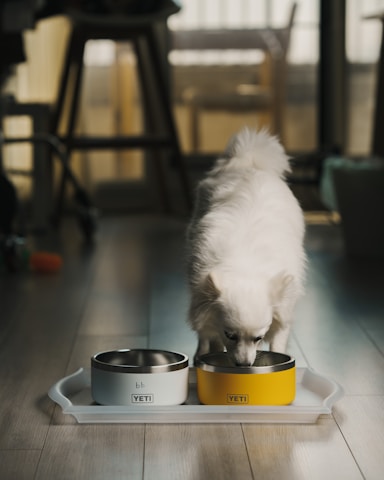
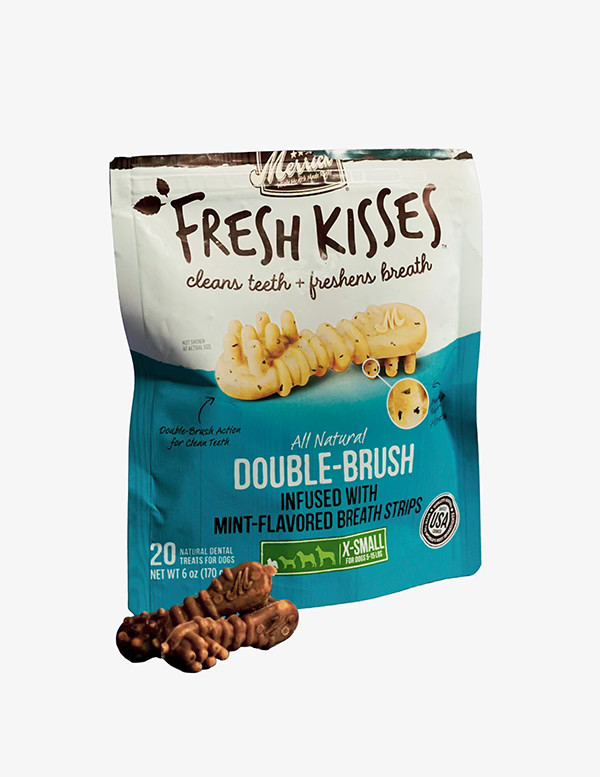
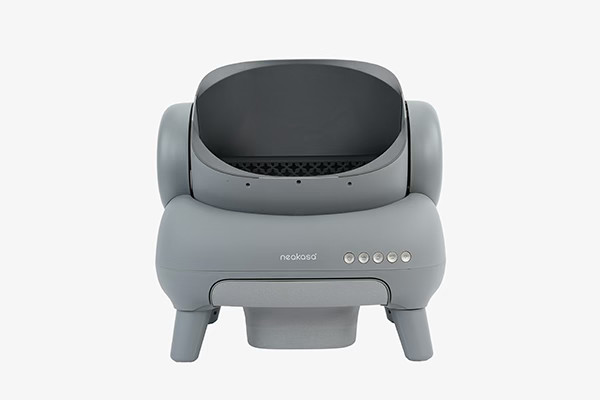
Pet owners face generic, overwhelming retail experiences that lack personalization. Most don't know which products suit their pet's age, breed, health, or lifestyle—causing decision fatigue and missed sales. The challenge: design an AI-powered experience that guides owners to the right products faster while strengthening their connection to the brand.
To design an AI-powered pet retail experience that felt intuitive and genuinely helpful, I followed a condensed but rigorous product design process adapted for a self-initiated project. The goal was to ground the solution in real user behavior and industry patterns, even without live user data or engineering input.

I explored how agentic logic can interpret complex pet profiles to reduce decision fatigue, moving beyond generic retail filters to a guided, intent-based commerce model.
Key insights included:
These insights shaped the core hypothesis:
If the app provides personalized, AI-generated recommendations that adapt to each pet's profile, users will discover relevant products faster and feel more confident in their choices.
I built a design strategy around three principles: personalization, simplification, and guided decision-making. The strategy rested on three measurable assumptions:
I mapped the core data inputs needed for personalization—pet profile details, user preferences, and product metadata—and showed how these would drive recommendations in the interface. This clarified how the AI should behave from a UX perspective.


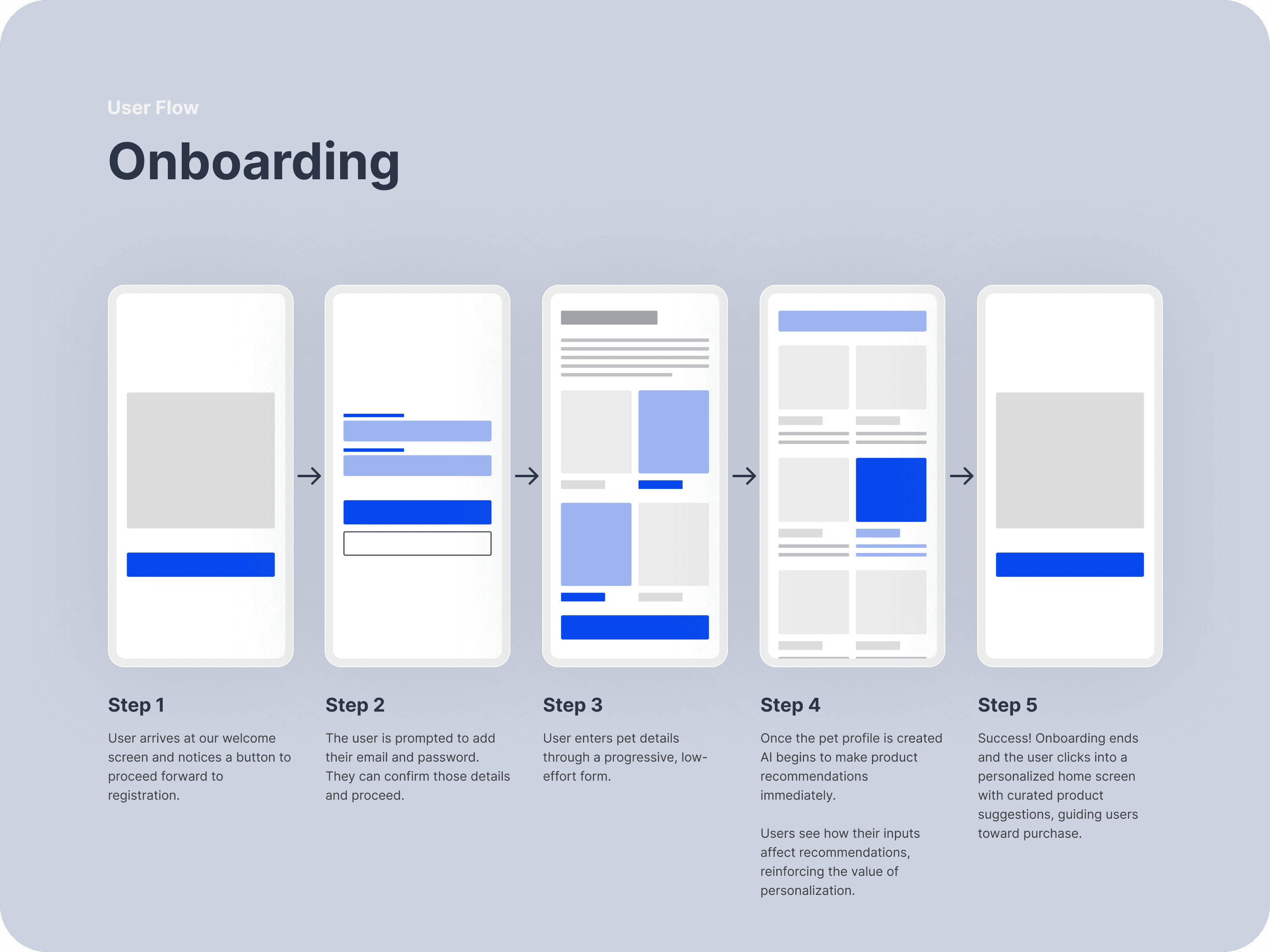
The user journey for PetZing was designed to guide pet owners from onboarding to purchase through a fast, personalized, and trust-building experience. The flow begins with creating a pet profile using a progressive, low-effort form that updates recommendations in real time. This immediate feedback helps users understand the value of personalization early in the experience.
Once onboarding is complete, users land on a tailored home feed with curated sections such as Keep Shopping For, and Smart Picks For You. Lightweight interactions such as swiping, thumbs-up, or quick-add buttons let users refine recommendations without navigating away.
Product detail pages become the decision point, offering personalized pros/cons, feeding guidance, allergy alerts, and a clear "Why this for [PetName]?" explanation. These tailored insights reduce uncertainty and improve decision-making. The checkout flow is a single-page, streamlined experience with delivery estimates, subscription suggestions, and fast payment options.
Key metrics for consideration would be:


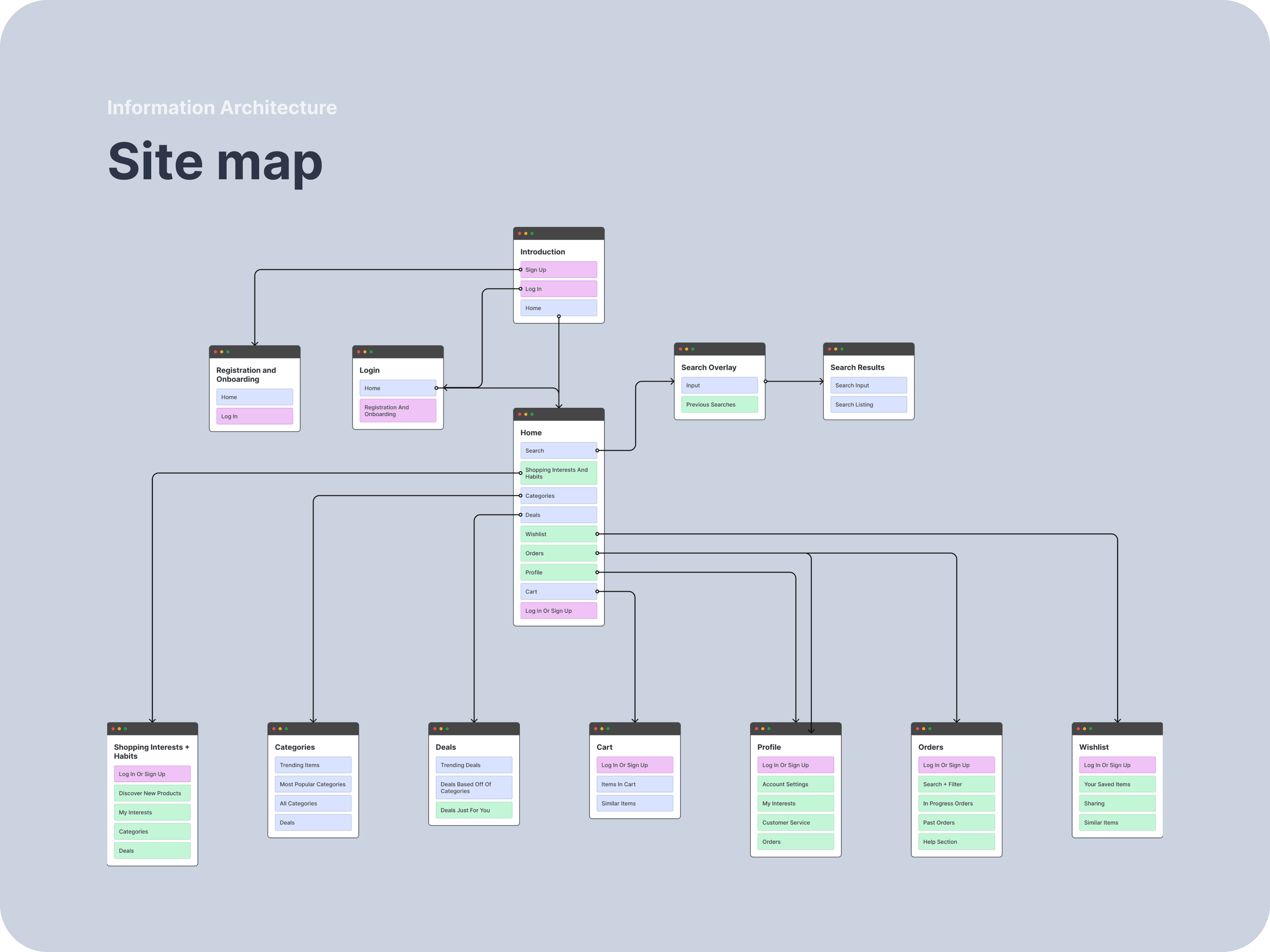
PetZing's information architecture is built around the pet profile, ensuring every major feature—recommendations, search, products, and subscriptions—connects back to personalized content. Primary navigation focuses on the home feed, pet profiles, search, orders, and saved items, while secondary features like help and account settings stay accessible but unobtrusive.
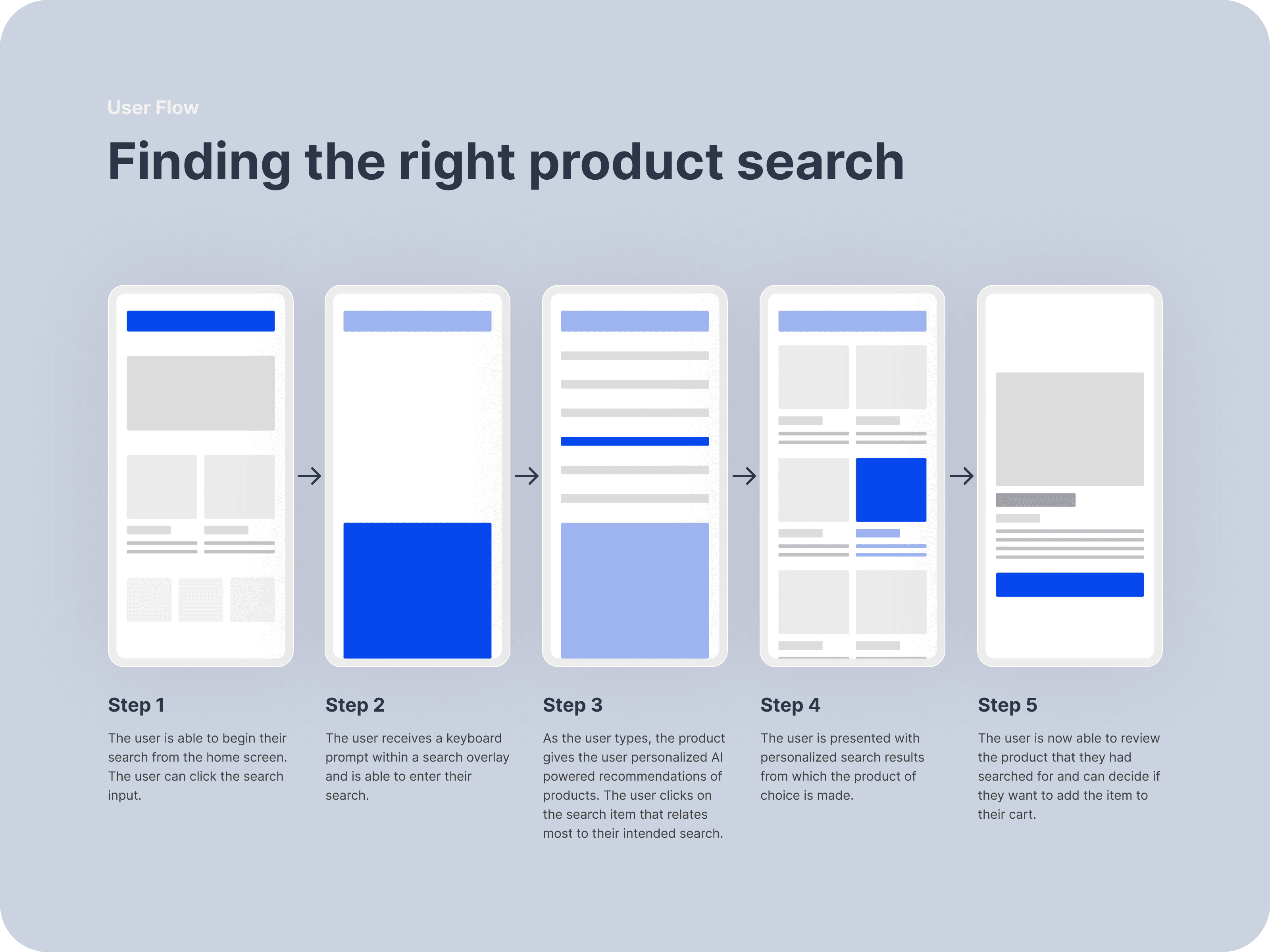
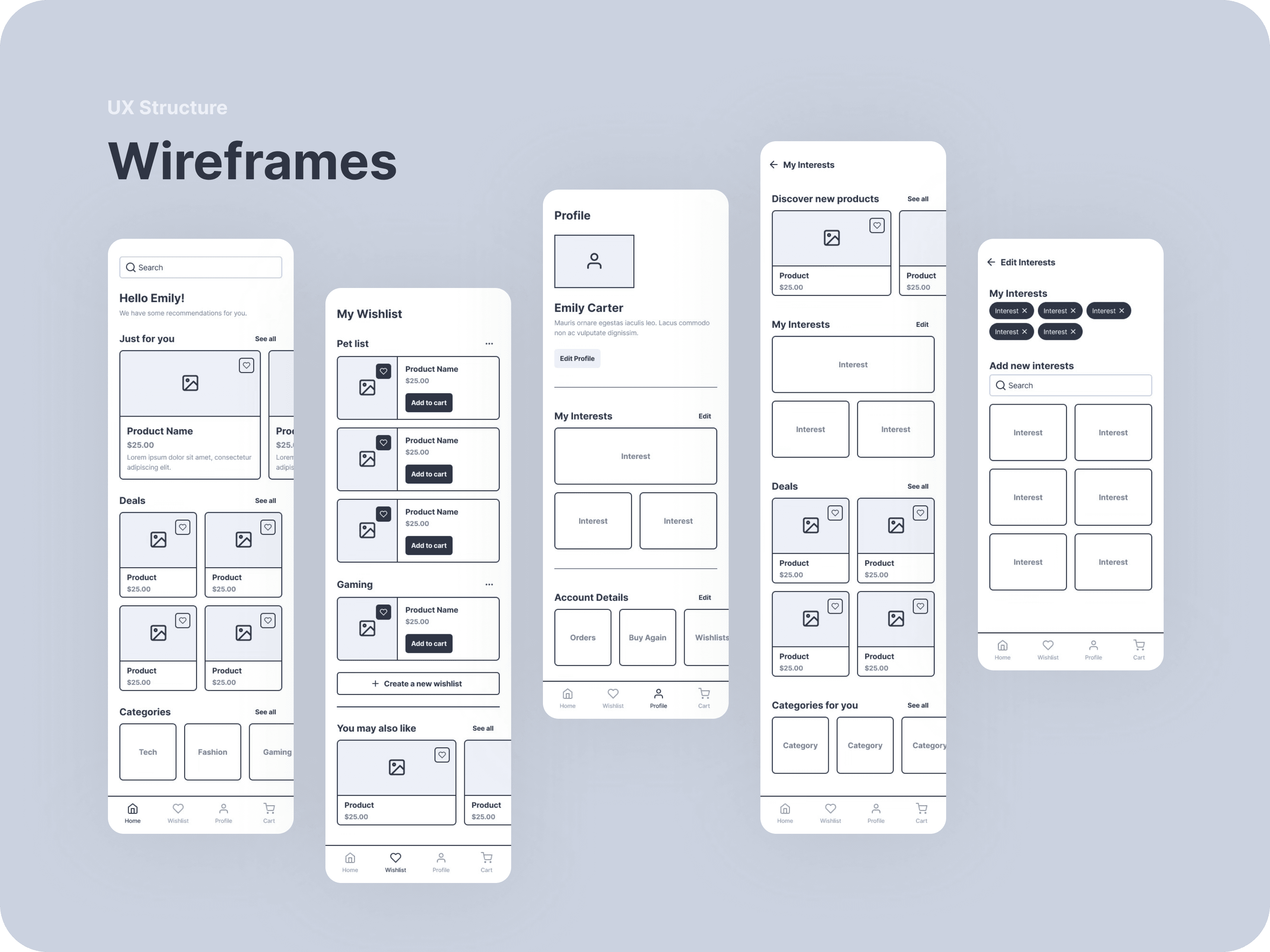
Wireframes were created to support clarity and scalability. The home feed is structured with card-based recommendations and horizontal carousels to quickly surface relevant items. Search combines AI-driven natural language queries with standard filters to help users find the right products faster.
Product detail wireframes emphasize a clean layout with large imagery, key product facts, and a dedicated "Why this?" section tied to the pet profile. The checkout wireframes follow a single-page flow with editable items, delivery timelines, and subscription toggles for reduced friction and better transparency.


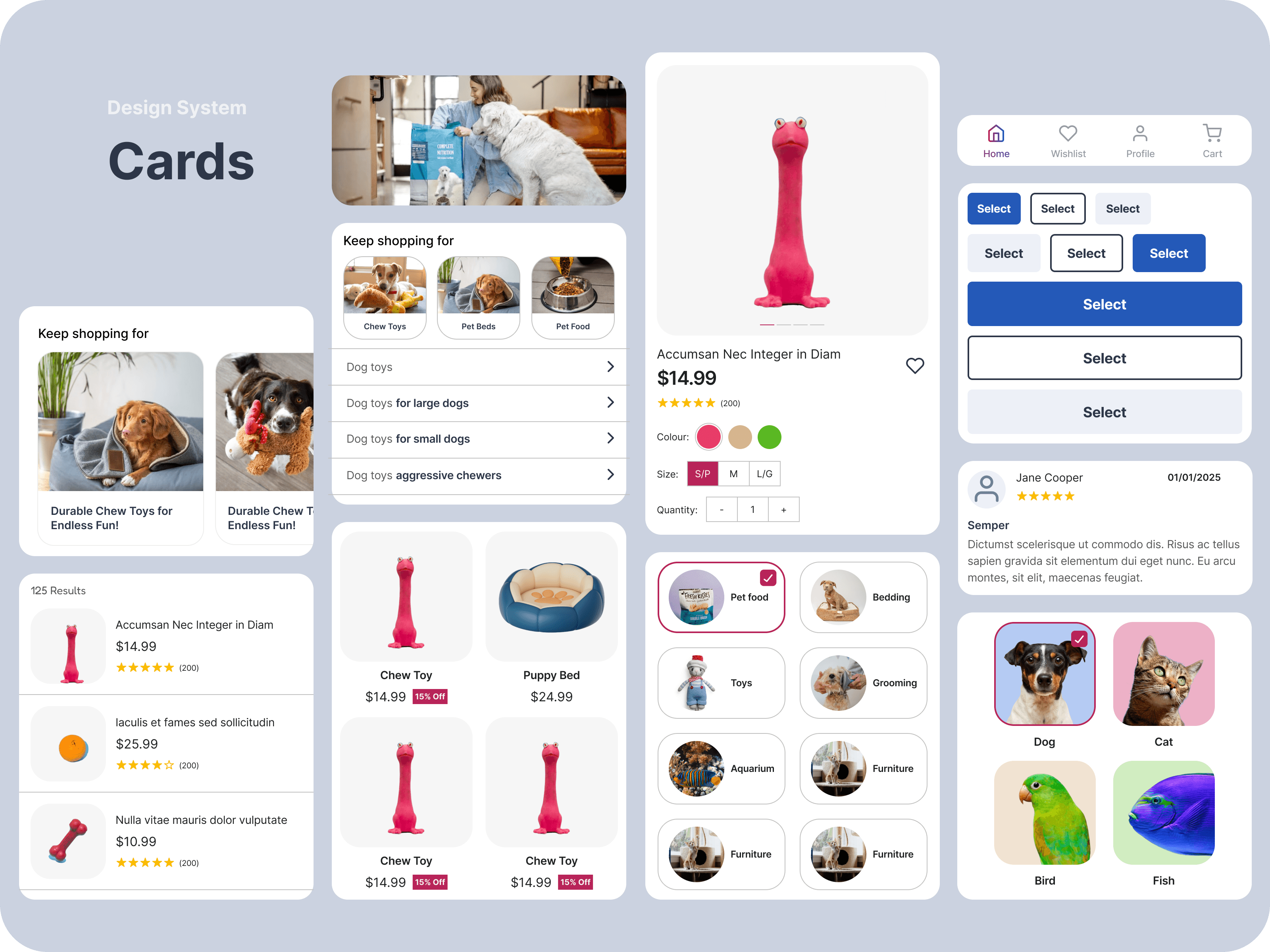
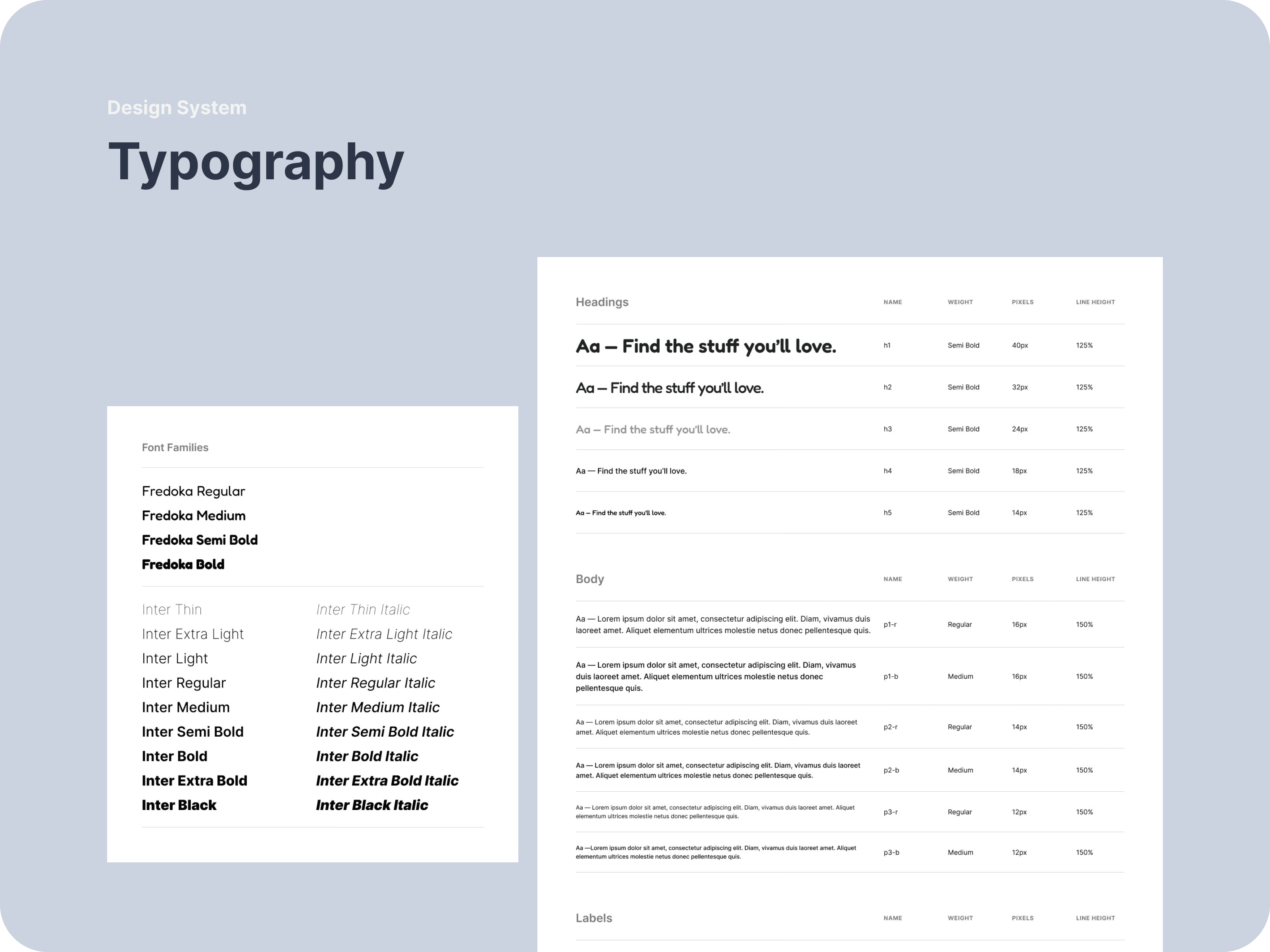
The PetZing design system provides a consistent, friendly, and accessible foundation for the product. The visual language uses a teal primary color, warm accent tones, soft neutrals, and high-contrast semantic colors to ensure clarity across all states. Inter is used for both headings and body text, supported by a simple type hierarchy and an 8px spacing scale for predictable layouts.
Core components include navigation patterns, recommendation cards, product modules, forms, filters, modals, and notification elements. Each component maintains consistent states and accessibility requirements, including keyboard navigation, ARIA labels, and sufficient tap targets. Icons follow a uniform outlined style to keep the UI clean and cohesive.
Subtle motion reinforces interactions—such as add-to-cart animations or expanding rationale sections—making complex experiences feel simple and intuitive. All foundational tokens (colors, typography, spacing, elevation) are exported for both Figma and development to ensure smooth handoff.
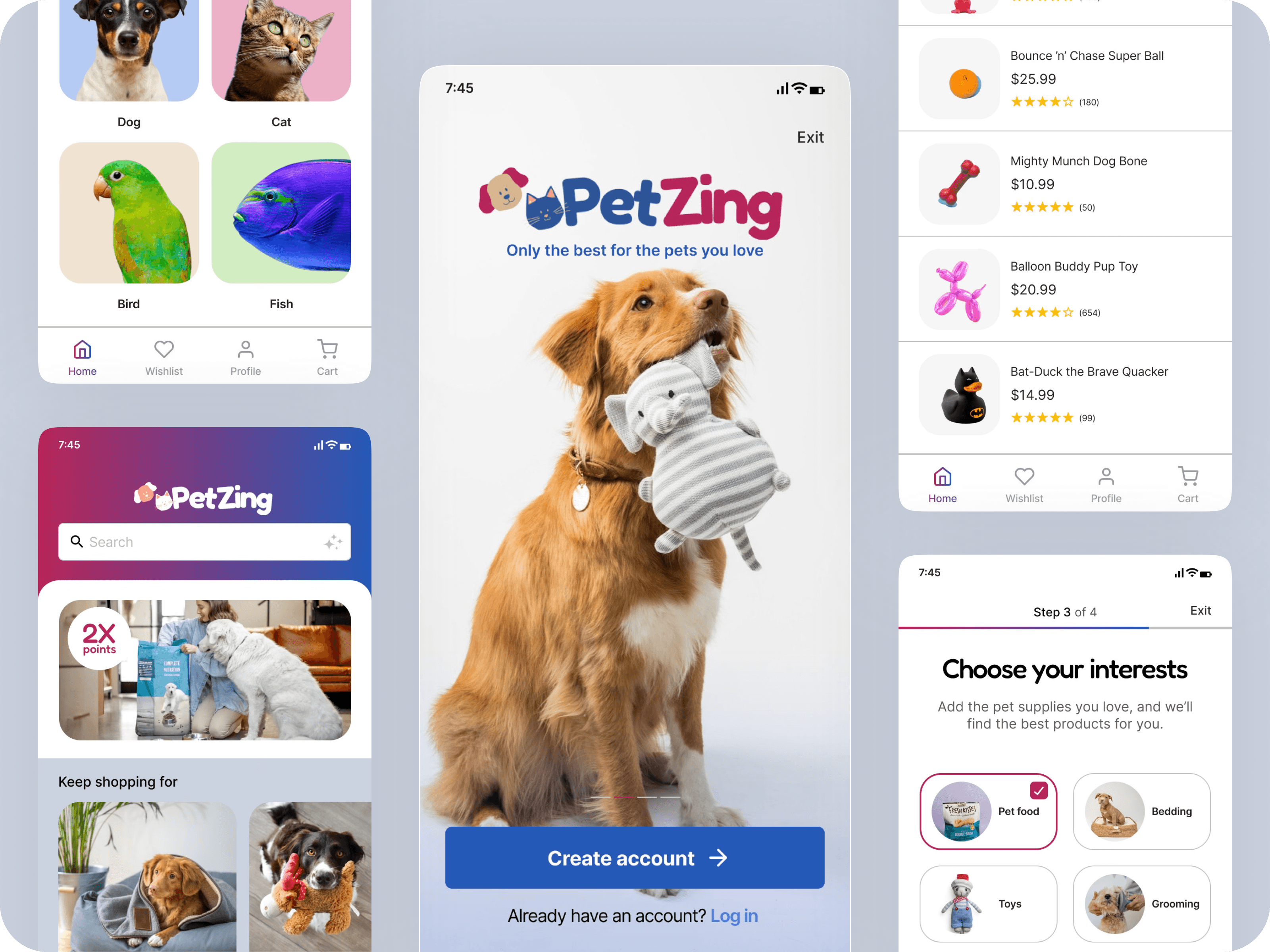
The high-fidelity designs translate PetZing's vision into a polished, approachable interface with warm visuals, ample spacing, and friendly microinteractions. Screens emphasize clarity and trust: onboarding uses a playful pet avatar and progress indicator, while the home feed highlights personalized recommendations with clear match tags.
Search results blend AI-driven insights with product listings, offering confidence cues and filters to guide decision-making. Product detail screens showcase tailored feeding guidance, allergy notes, and comparison options within a clean, structured layout. The checkout interface maintains simplicity through a streamlined single-page experience with subscription recommendations and fast payment options.
The clickable prototype demonstrates the full end-to-end flow—onboarding, browsing, AI-assisted search, product comparison, and checkout. Usability feedback showed faster decision-making and higher trust in recommendations, validating the core experience direction.
This research validated that AI-driven guidance is projected to increase user engagement by 10–15% by simplifying complex consumer decision-making through automated recommendation logic.
Even in a prototype, personalized recommendations significantly improved perceived confidence and usability—demonstrating how AI-driven guidance can enhance pet retail experiences. Simplifying flows and reducing decision fatigue proved essential. Lightweight usability testing provided clear insights to refine layouts, messaging, and hierarchy. Designing a flexible system ensures future features like multi-pet profiles or health-specific suggestions can be added easily.
Next steps include expanding AI touchpoints, testing with a larger and more diverse user base, and exploring e-commerce integrations and feedback loops to validate recommendation relevance and engagement in a real-world product. These steps would transform PetZing from a concept into a fully realized, scalable experience.
Let's discuss Senior Product Design, Agentic Workflows, or how I use Antigravity to solve complex business friction.