Modernized, High-Converting Website for an Evolving Executive Search & Culture Firm

Leading the end-to-end transformation of Waterstone's primary digital platform, establishing a scalable design system projected to drive a 15–20% increase in lead generation upon launch.
My Role
Senior Product Designer (Project Lead)
Team
Evelyn Ly - VP Marketing, Waterstone Human Capital (Project Scope, Content Strategy)
Tools
Figma, Webflow
Waterstone's previous website was built on a rigid WordPress theme that limited flexibility, slowed updates, and no longer reflected the brand's position as a leader in executive search, professional recruitment, and leadership & culture transformation.
The goal was to rebuild the experience in Webflow—creating a modern, scalable, and conversion-driven site that clearly communicates value to CEOs, CHROs, Heads of People & Culture, and mid-career professionals exploring new opportunities.

The project began with a full assessment of the existing website's performance and usability. I reviewed Google Analytics to understand underperforming pages, user drop-off patterns, and traffic behavior across service lines. This quantitative review was combined with stakeholder interviews—primarily with Marketing and Leadership—to understand business goals, messaging priorities, and the challenges posed by the previous WordPress setup.
A competitive analysis followed, focusing on executive search firms, leadership consultancies, and culture transformation companies. This helped identify gaps in positioning, opportunities for differentiation, and emerging UX trends relevant to C-suite audiences. I also completed a heuristic evaluation of the existing site to document friction points, inconsistencies, and navigation issues.
Key insights:
The strategy for the Waterstone website was built around three core pillars: clarity, credibility, and conversion. Clarity focused on simplifying the site architecture so that each audience—CEOs, CHROs, and candidates—could immediately find the information they needed. Credibility emphasized showcasing the firm's expertise through leadership insights, case studies, testimonials, and awards. Conversion aimed to structure pages with clear CTAs, scannable content, and persuasive messaging to drive lead generation.
Key focus areas included designing a modern, premium visual aesthetic, consolidating navigation for U.S. and Canadian audiences, creating a modular content system that Marketing could update independently, and streamlining service pages for Search, Recruitment, and Culture.
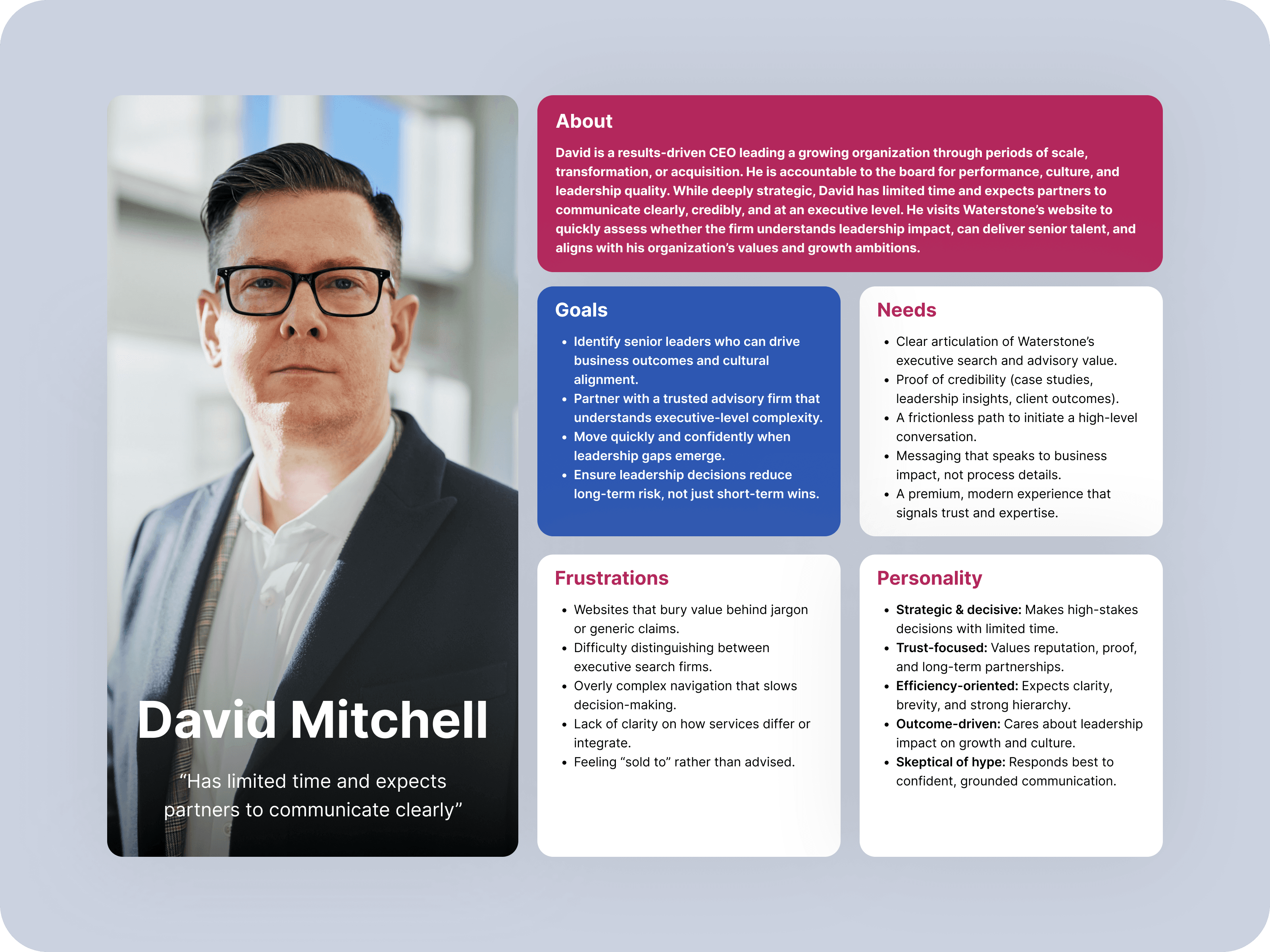
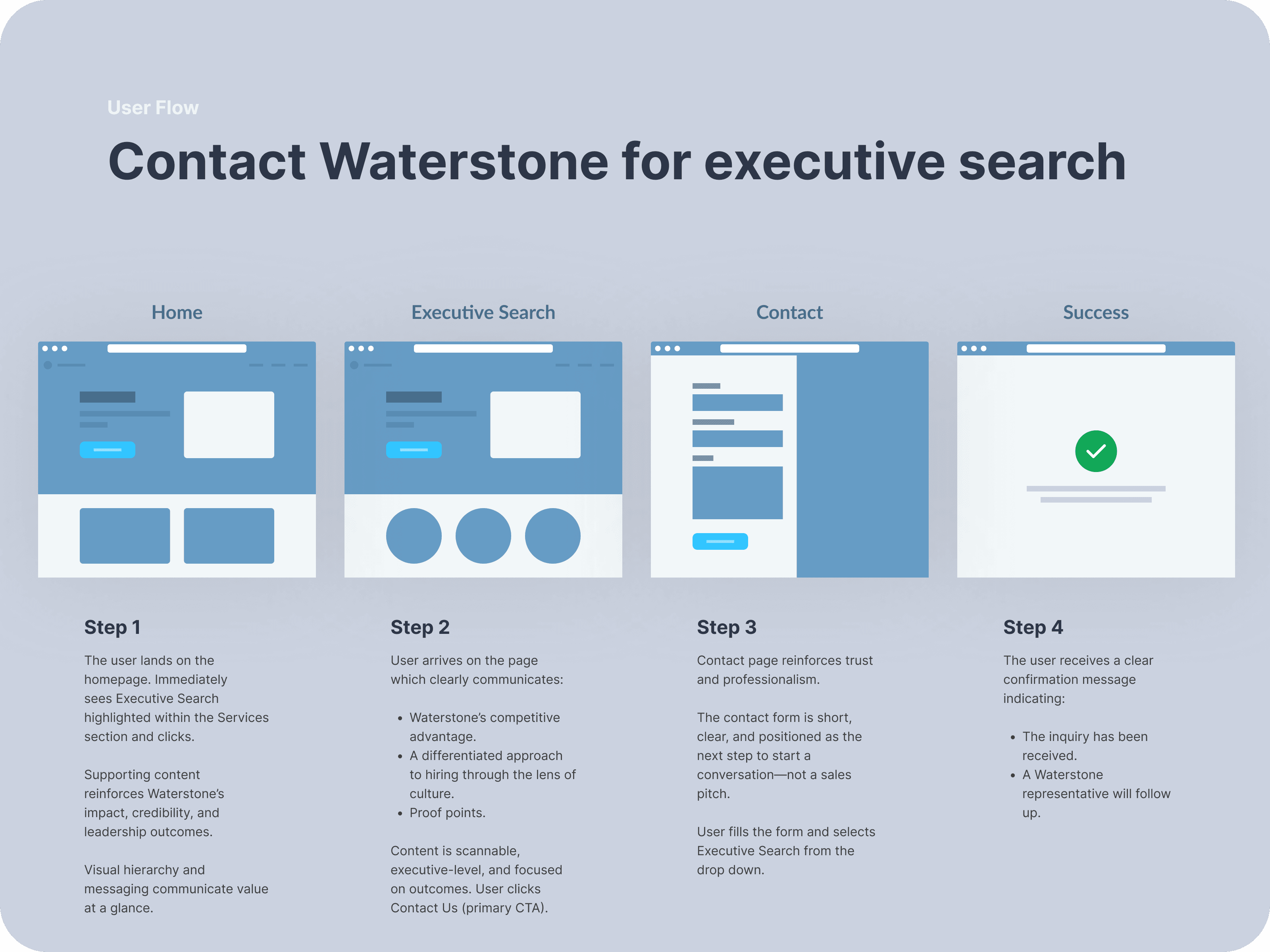
User flows were developed for two types of visitors, C-Suite executives seeking services, and mid-career professionals exploring client opportunities. The goal was to reduce friction, simplify navigation, and guide users efficiently to key actions, such as contacting the firm for services or exploring career opportunities.
Key improvements included reducing clicks to core services, clarifying pathways to contact forms, simplifying the job search and application flow, and adding guided paths for first-time visitors.


To solve the navigational complexity and content fragmentation of the previous website, I rebuilt Waterstone's information architecture from the ground up. The goal was to create a clear, intuitive structure that aligned with how CEOs, CHROs, and candidates naturally search for information—while supporting the marketing team's need for scalable, modular content management.
I reorganized the site into three primary experience pillars that mirror Waterstone's core business units:
This new structure eliminated redundancy, reduced unnecessary clicks, and clarified the relationships between service lines—an essential improvement given the firm's expanding U.S. presence and evolving brand narrative.
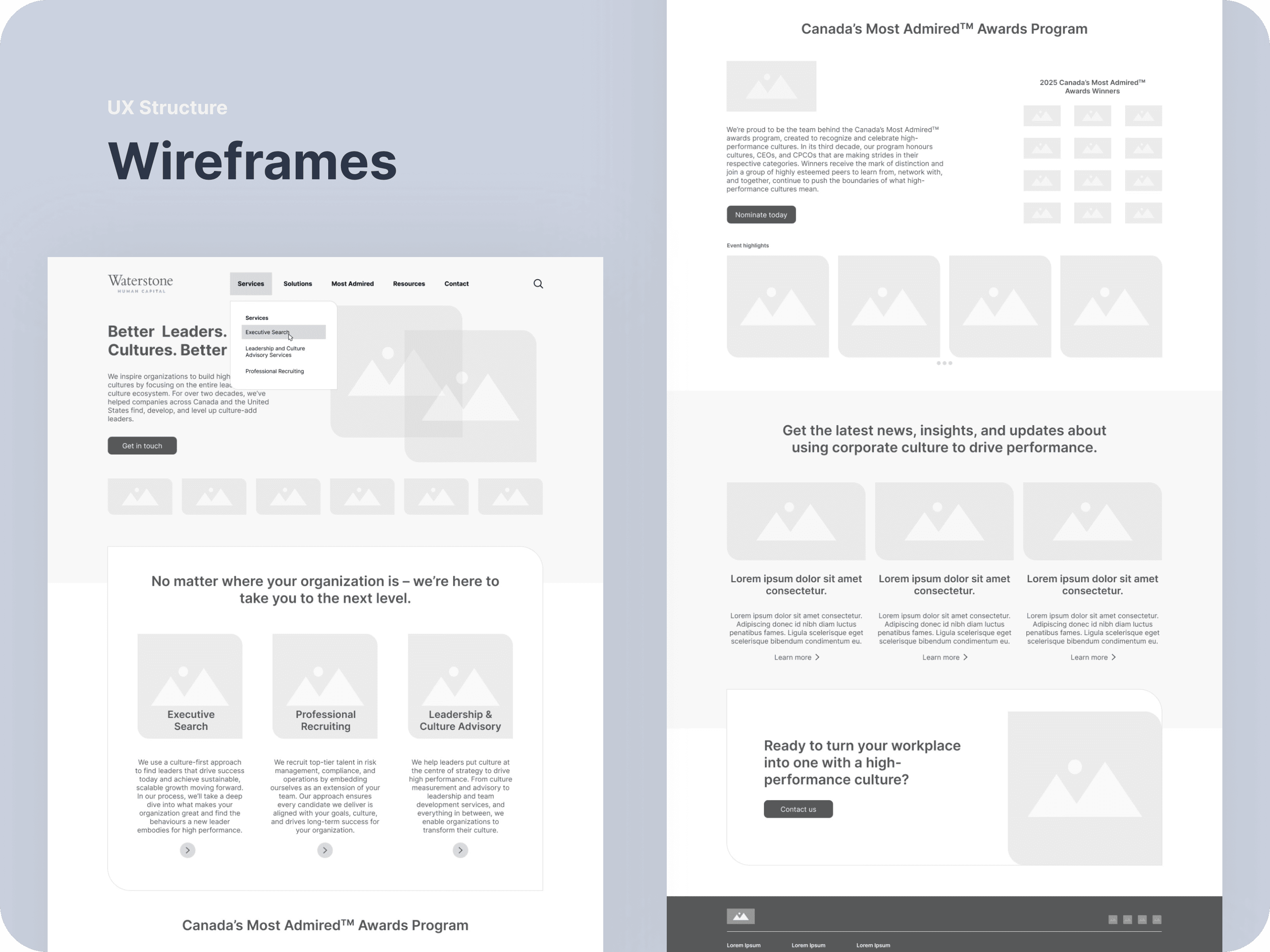
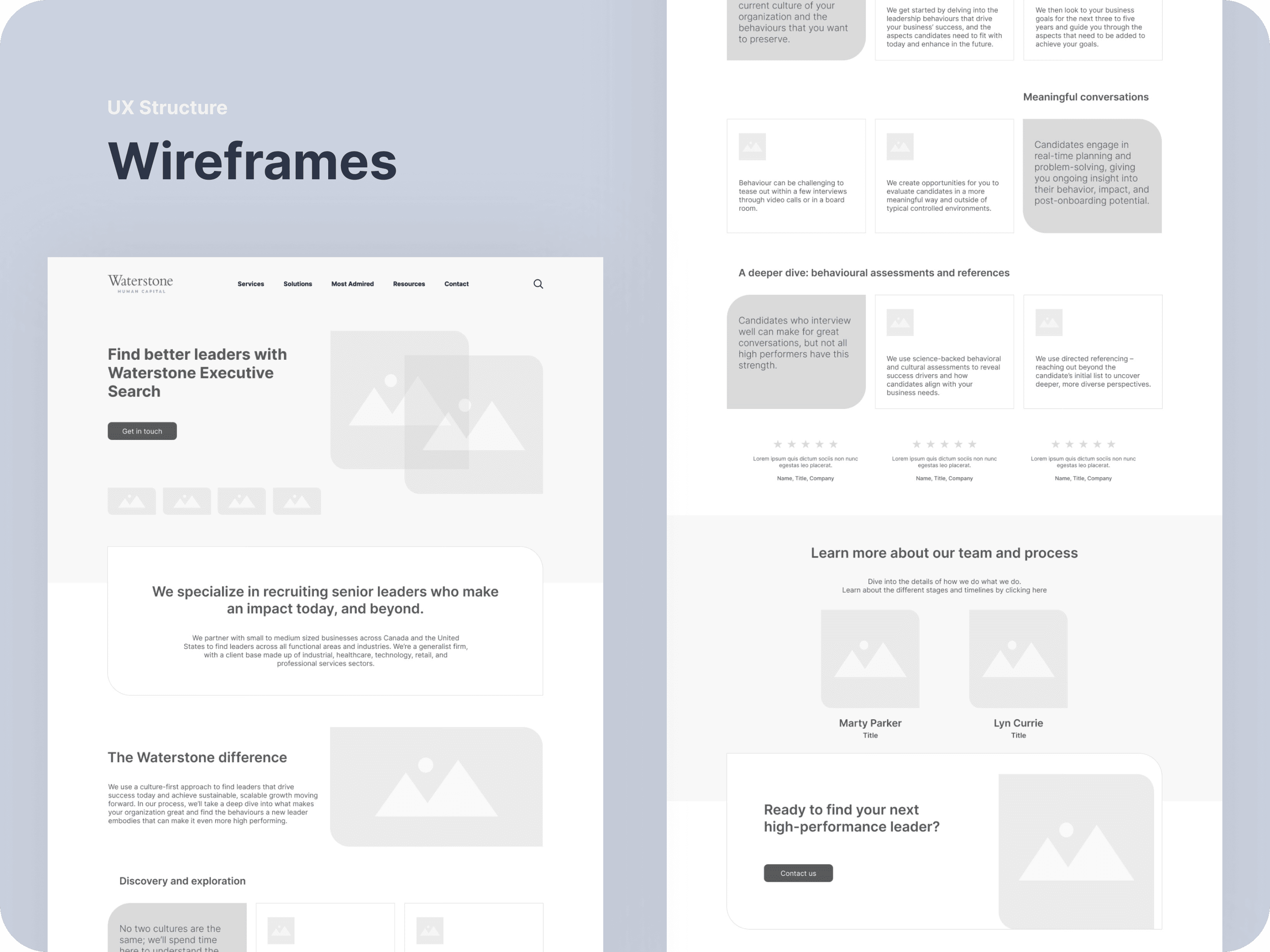
With the architecture established, I developed low-fidelity wireframes to map out the complete content hierarchy, interaction patterns, and conversion flows. The wireframes focused on:
These wireframes became the blueprint for aligning stakeholders on layout, messaging placement, user pathways, and the overall experience direction before moving into high-fidelity design.


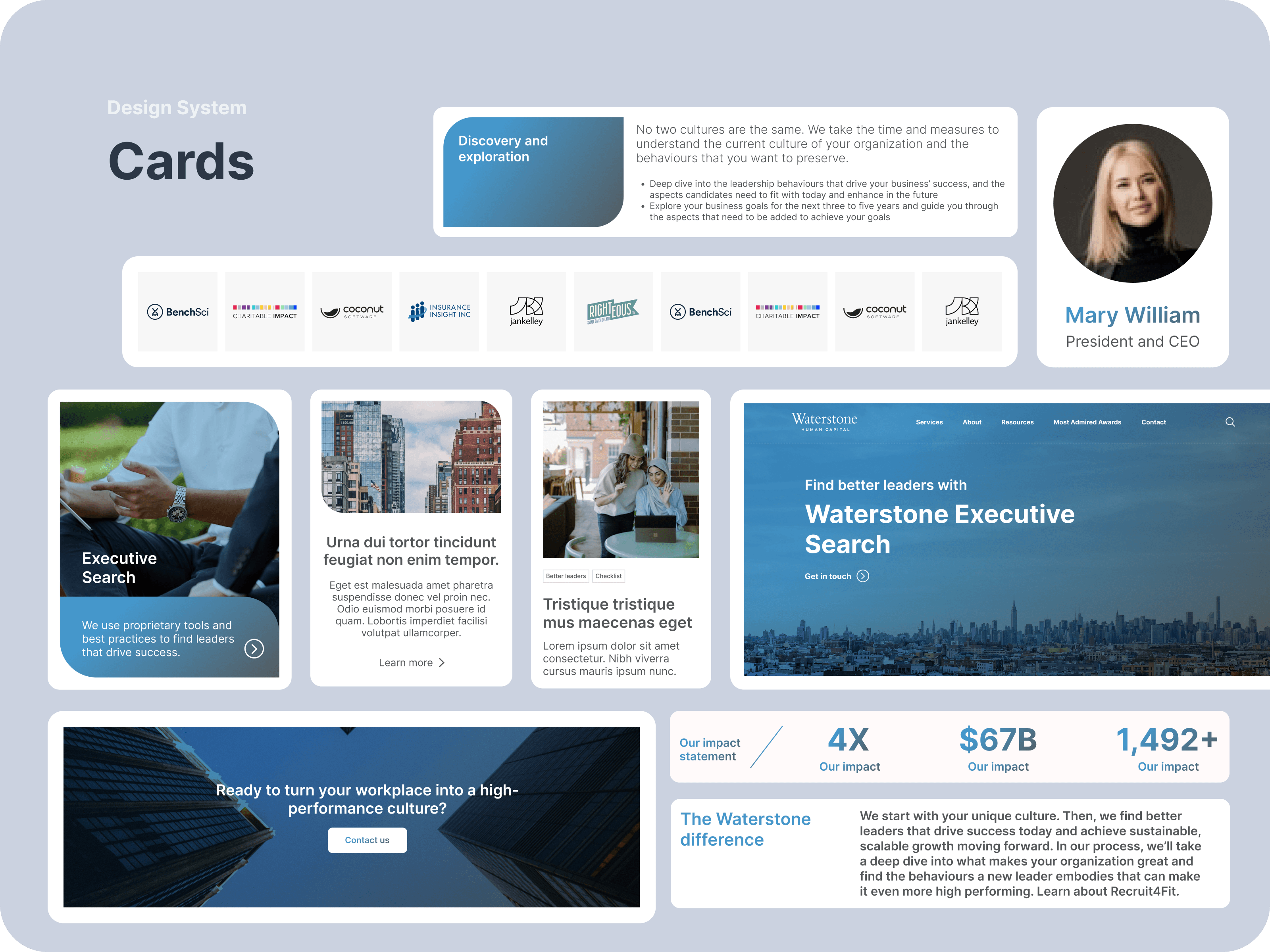
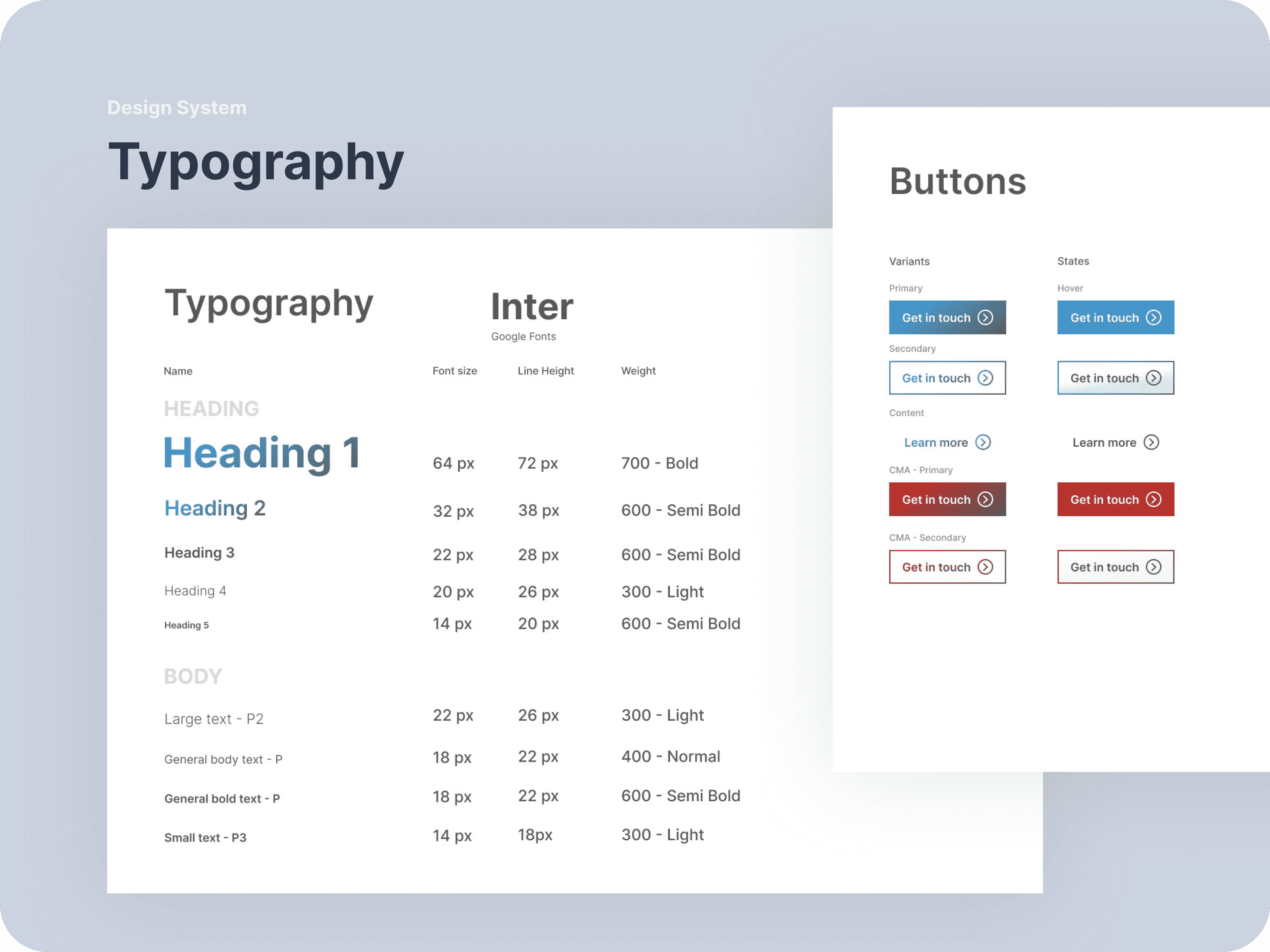
A modernized design system was created for scalability, including refined typography, modular grid layouts, responsive components, and a professional color palette to build trust and credibility. Reusable blocks were developed for services, testimonials, case studies, and insights, while updated imagery highlighted leadership and culture impact.

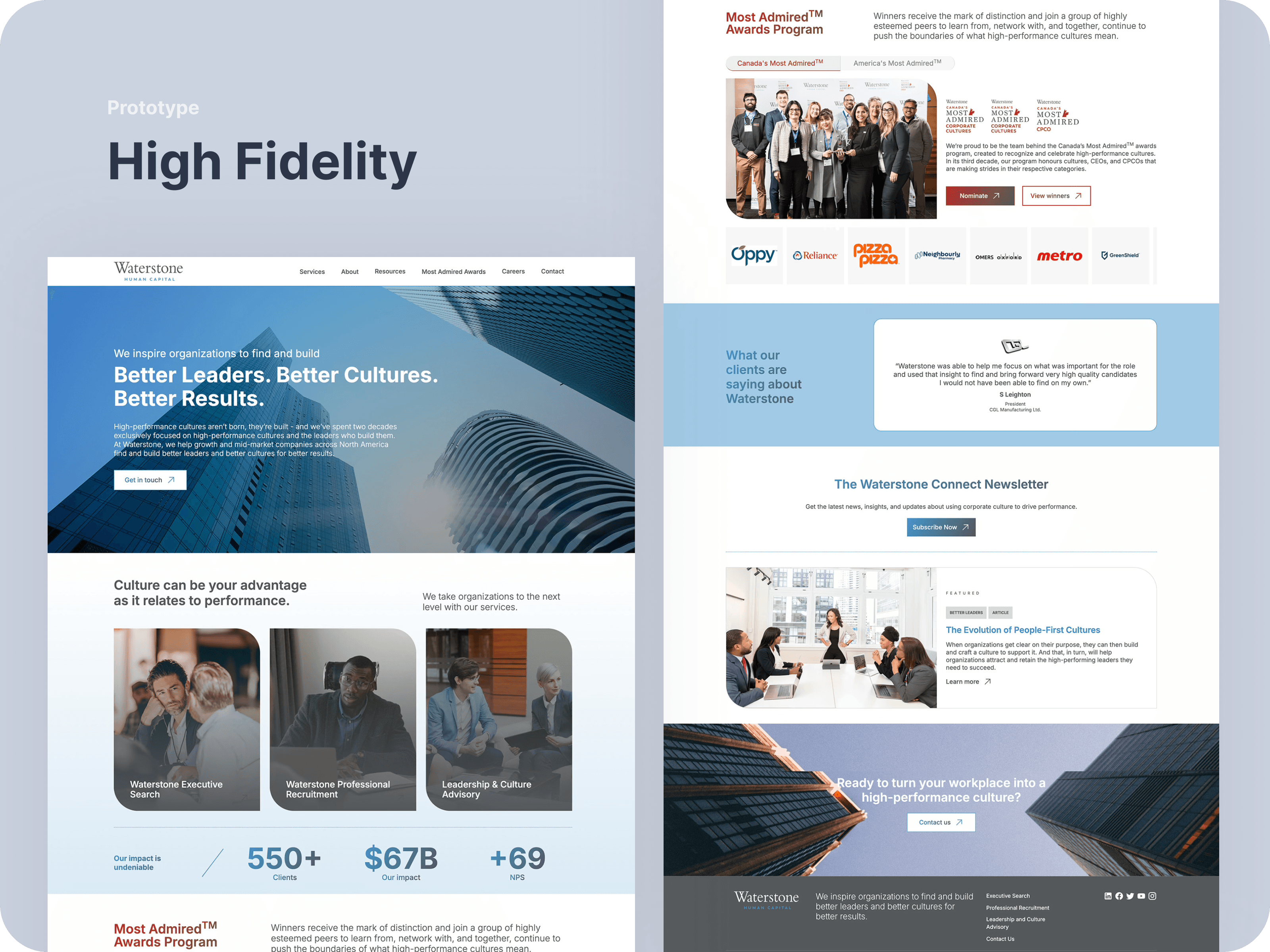
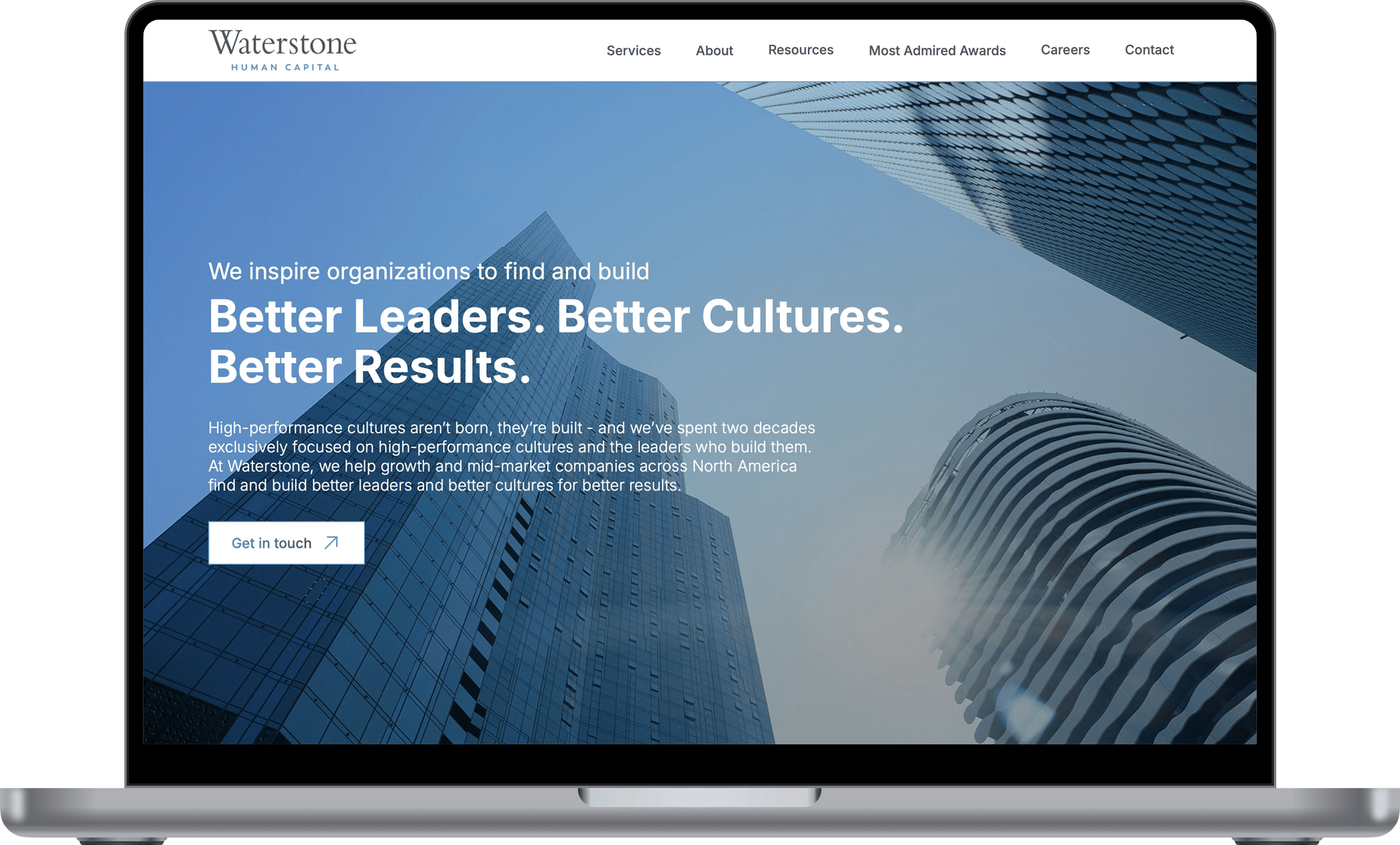
After validating the information architecture and wireframes, I translated the experience into a refined, modern visual system that reflects Waterstone's credibility as a leadership and culture authority. The high-fidelity designs focused on elevating clarity, trust, and conversion through clean typography, a structured grid, and a flexible component library built for long-term scalability.
Each page was designed using a modular approach—hero blocks, service sections, testimonials, proof points, and insight cards—allowing the marketing team to quickly build or adapt layouts without compromising consistency. The visual direction leaned into a premium, executive-focused aesthetic with purposeful whitespace, improved content hierarchy, and imagery that communicates leadership, partnership, and organizational growth.
In Webflow, I developed an interactive prototype to bring the full experience to life. It showcased responsive behavior, smooth micro-interactions, and optimized conversion flows for both client and candidate paths. This prototype enabled stakeholders to experience the redesigned journey end-to-end and provided a clear blueprint for seamless handoff and implementation.
The platform transformation is projected to increase lead capture by 15–20% and improve task completion efficiency by 10–15%. This project established the foundational design standards required for a successful 2026 strategic rollout.
This project reinforced the importance of designing for multiple audiences with overlapping but distinct needs. It also highlighted the value of modular, scalable systems over rigid templates, enabling marketing teams to manage content independently.
Next steps:
Let's discuss Senior Product Design, Agentic Workflows, or how I use Antigravity to solve complex business friction.